
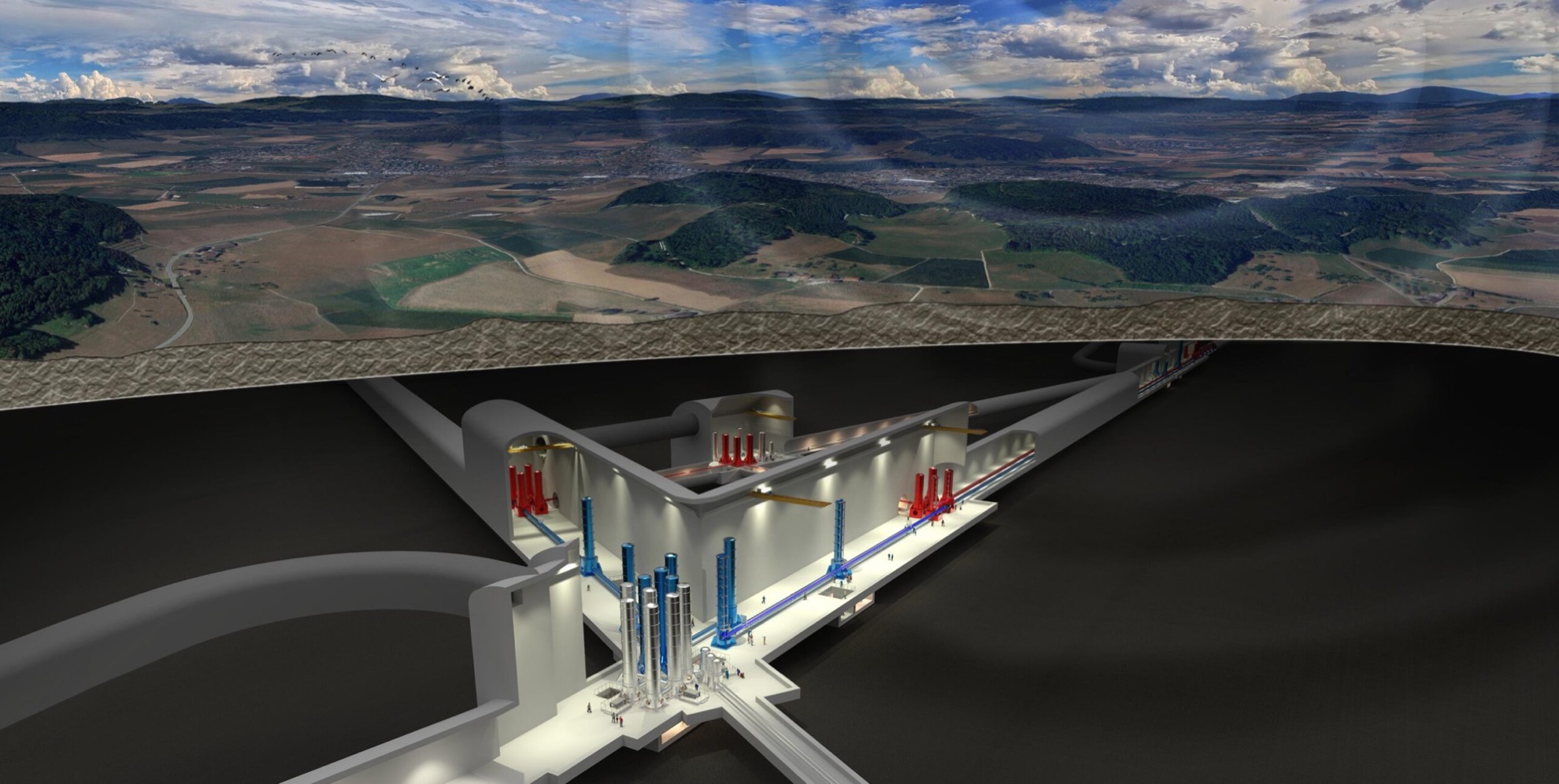
What if we could decode the gravitational-wave background of the Universe?
Gravitational waves are ripples in the curvature of spacetime, travelling across the cosmos at the speed of light and carrying information about some of the most extreme events in the Universe. They are produced by the accelerated motion of compact massive objects, most notably during the coalescence of binary black holes and neutron stars. By detecting these incredibly small distortions of spacetime, gravitational-wave and multi-messenger astronomy allow us to probe gravity in its strongest regime, test general relativity under extreme conditions, and explore astrophysical phenomena that may remain invisible to electromagnetic observations. In this way, gravitational waves provide a new, complementary way of studying the Universe and tracing its evolution beyond what we can learn from light alone